Trump's 'quick' war exceeds 40-day mark, USDA reminds market of fundamentals


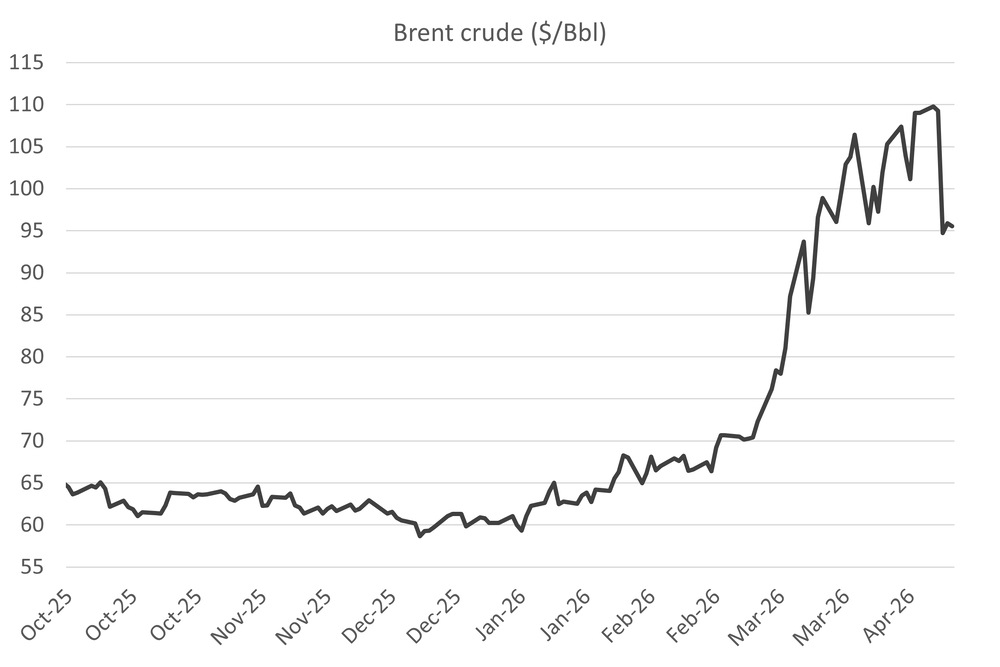
When the war began on 28 February it was pitched as a quick, decisive mission. Now, after 41-days, the effects are still being felt and a ceasefire remains fragile and confusing.
Despite the ceasefire, transit through the Strait of Hormuz remains heavily constricted and under Iranian control.
Shippers and insurers remain extremely cautious about transiting the strait, through which around 20% of the world’s traded oil and natural gas moves, with growing concerns of jet fuel shortages in coming weeks unless a solution is found.
For fertiliser too the consequences have been severe. Iran is a major fertiliser economy itself, producing about 9Mt of urea a year, of which about half is exported.
It still has control of the Strait of Hormuz, through which most of the Middle Eastern production flows. The likes of Egypt, Oman, Qatar and Saudi Arabia have expanded fertiliser industries in recent decades to capitalise on this.
Combined with Iran’s exports, these countries account for 22Mt of urea shipments a year, equivalent to 40% of global offshore trade.
The impact on grain markets
The outcome and objectives of the war are as unclear today as they were on day one, when we published three scenarios assessing the impacts on grain markets - which are less directly exposed to the conflict – based on the duration of the conflict and impact on energy and fertiliser prices, grain markets are now beginning to factor
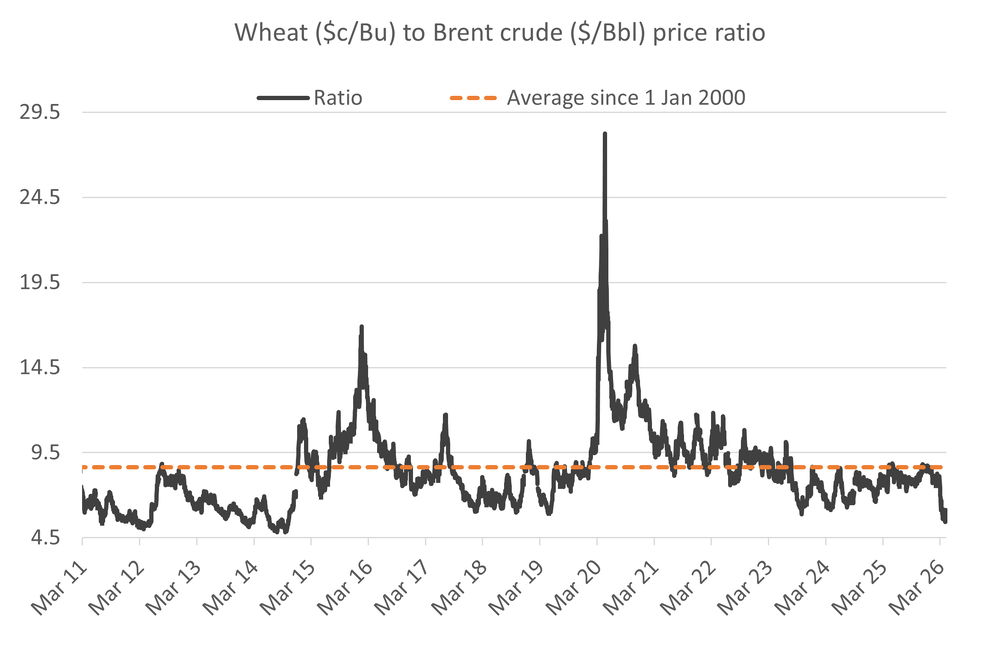
Wheat prices remain sluggish versus oil, contrasting with the commodities’ historic price correlation. This has driven the price ratio of Brent crude ($/Bbl) to Chicago wheat ($c/Bu) below 5.4 for the first time since 2014 – taking it further below the 10-year average of 8.8, and towards the 5.0 level which has historically resulted in higher wheat or lower oil prices.
Fundamentals remain a key long-term driver of grain prices
Geopolitical factors have historically captured the attention of markets for a few days to months, however long-term supply and demand will ultimately determine the trend of prices.
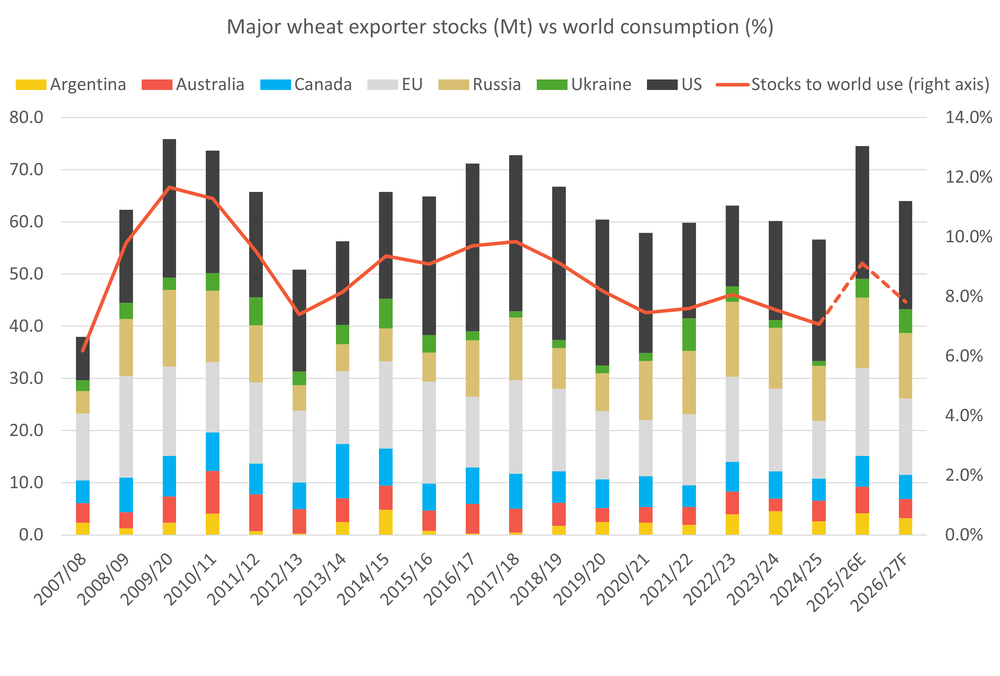
The USDA this week reminded the market of this, with its April WASDE report which raised wheat exporter supplies to an eight-year high and increased global corn stocks for 2025/26 to 294.8Mt.
Weather issues, such as the US Plains dryness impacting wheat crop condition, will now start to play an increasingly influential role in the narrative and factors influencing prices.
Key takeaways
Markets will maintain geopolitical and supply risk premium for some time, even with an end to the war the damage to infrastructure and trade flows will take many months to repair. Iran has now proven their ability to control the Strait of Hormuz, and switch off the tap to world energy markets in a matter of days, with limited intervention from other countries.
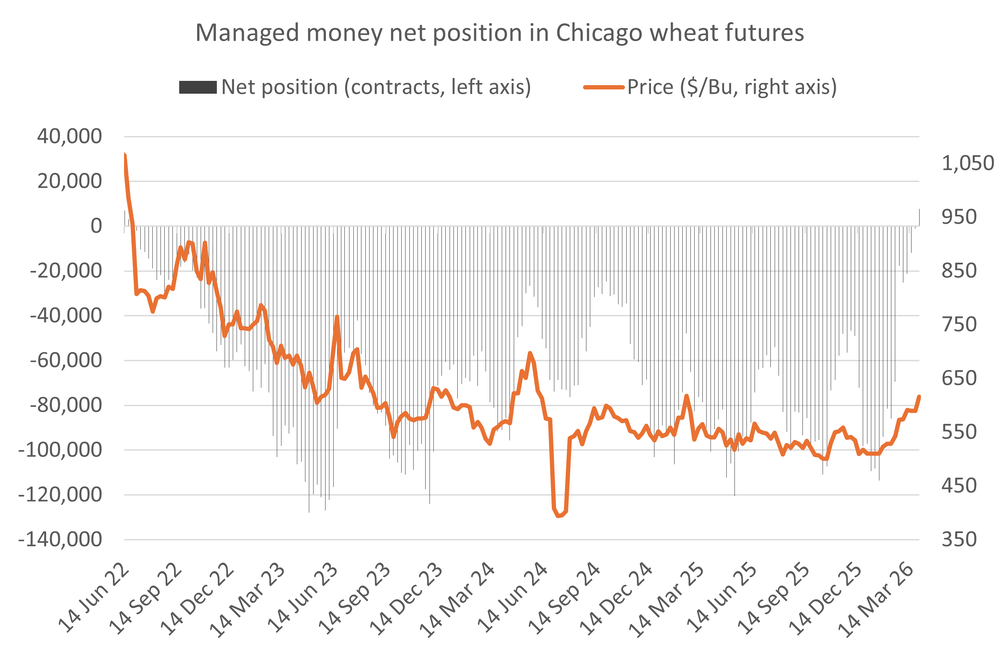
Investors now have a renewed interest in holding commodities in their portfolios and a notable sentiment shift has been witnessed in recent months, for example in wheat, in which managed money has moved from a net short of over 100K contract to a net long in Chicago in six years.
Trusted analysis, forecasts and advice
CRM Agri delivers totally independent market analysis, market leading and award-winning forecasts to support your decisions making and strategic risk management advice to give you an edge in volatile markets.
Get in touch for a trial.