Wheat futures hit by talk of US imports of Argentine supplies
• Argentine wheat said be pricing in to US South East
• Russian wheat stocks up 21% year on year
• Hopes improve for rainfall for southern Plains winter wheat
• Algeria purchase believed to be 600Kt
• Rapeseed weighed by firm euro, tight crush margins
Chicago led a retreat in wheat futures as talk of US purchases of Argentine supplies raised doubts over the sustainability of recent price gains, while data showed Russian stocks at a three-year high.
Market rumour said that the buoyancy in US wheat prices, which in the US Gulf export market reached a one-year high of $250/t last week, was allowing Argentine supplies into the US South East.
Argentina wheat was priced on Monday at $206/t FOB, well below the $240/t it was priced at a year ago.
Separately, Russian data showed the country’s wheat stocks as of 1 February up by 21% year on year at 16.5Mt, reflecting a slow pace of exports when compared with last year’s 90Mt harvest. SovEcon trimmed by 300kt to 45.4Mt its forecast for the country’s 2025/26 wheat shipments.
With weather forecasts increasing rains expected from next week in the US southern Plains, where expanding has raised concerns for winter wheat, and wet areas of France drying out, markets removed some premium from wheat prices.
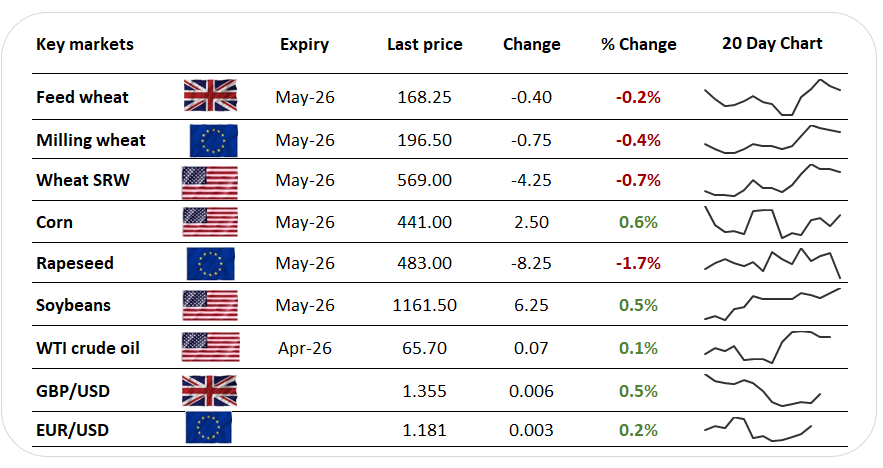
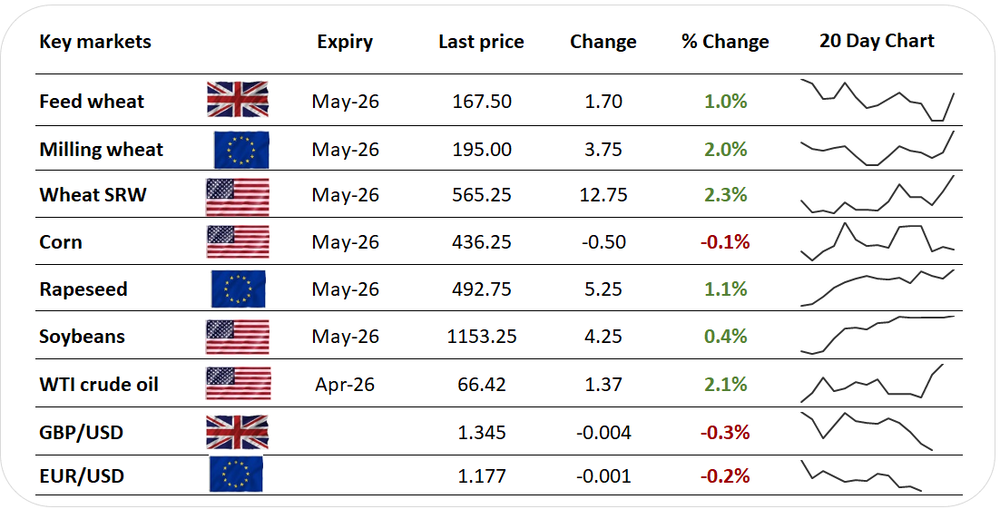
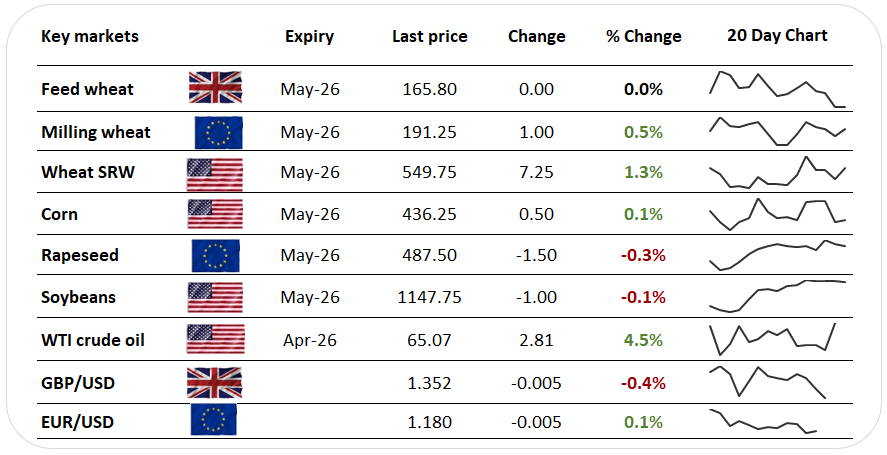
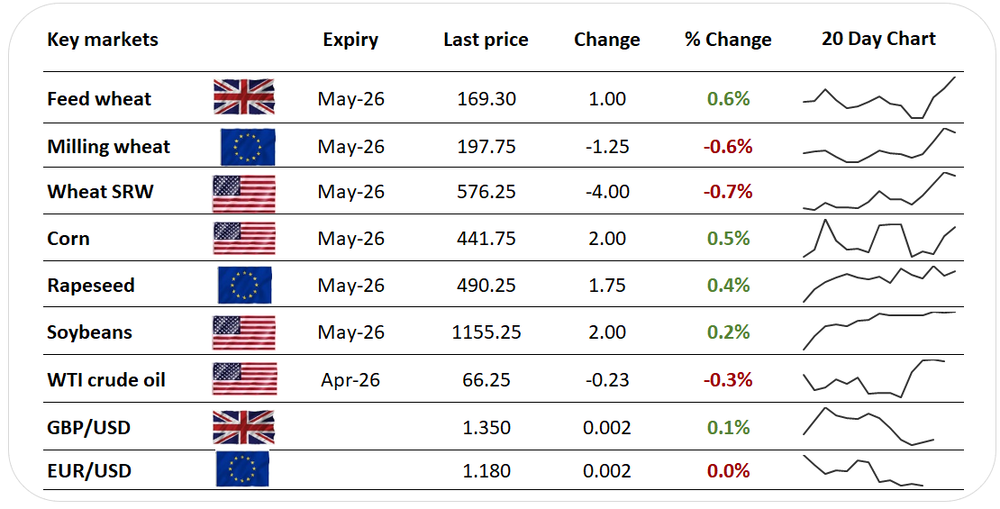
Chicago soft red winter wheat futures for May-26 traded 0.8% lower in late morning trading, as did May-26 futures in hard red winter wheat, as grown in the southern Plains.
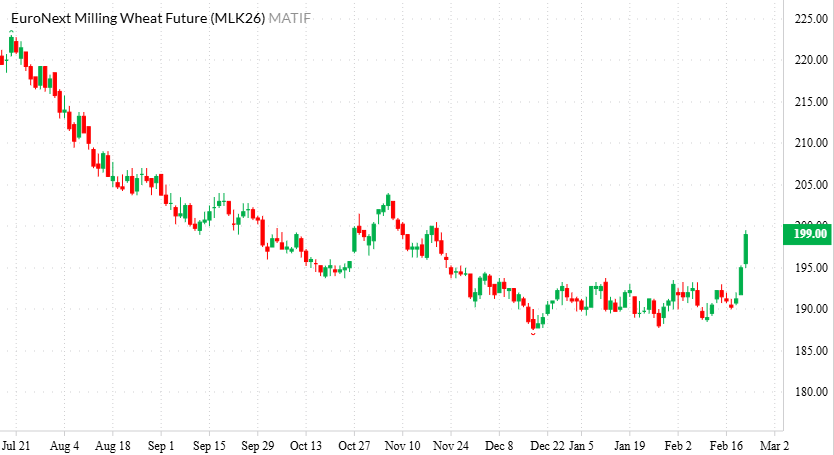
Paris milling wheat for May-26, having witnessed a less marked rally than its Chicago peer this month, settled down a more modest 0.4%, despite the headwind of a firmer euro.
London feed wheat for May-26 eased by 0.2%, to fall back below its 50-day moving average.
Algeria was reported to have bought 600Kt of wheat at its latest tender, although it was expected to be bought from Black Sea origins rather than western Europe.
Rapeseed futures for May-26 fell by 1.7%, undermined by the stronger euro and compressed European crush margins, besides by signs of the rally in soyoil losing momentum in Chicago.
EU rapeseed import data, while showing a modest 7.0Kt for last week, showed a further upgrade to the figure for the first week of February, to 265.5Kt, a nine-month high.
The number was originally reported at 65.6Kt, before being lifted in last week’s briefing to 201.3Kt.