Soybeans lead grains lower, as hopes fade of Chinese buying spree
• Signals from Trump visit to Beijing erode hopes for Chinese grain orders
• Soybeans, of which China is the top importer, particularly weighed
• Funds wrong-footed, after buying soy heavily
• Hopes for US Plains rainfall weigh on wheat too
Soybean futures led a tumble in grain prices, as signs that President Donald Trump’s visit to Beijing would not, after all, spark Chinese orders of US grains wrong-footed funds, who had bet heavily on purchases.
Crude oil markets played a supporting role in grain market weakness, softening on talk that Iran had relaxed its blockade of the Strait of Hormuz. Iranian state media reported that about 30 vessels had crossed the Strait in the previous few hours.
Brent crude futures shed 1.0% to $104.60/Bbl.
However, the key pressure on grains came from growing pessimism that Mr Trump’s trip to Beijing would inspire a raft of Chinese orders of US grains, in particular soybeans, of which China is by far the world’s top importer.
Indeed, managed money lifted its net long position in soybean futures to 213.5K contractgs as of last Tuesday, the latest data available, not far from the record of 240.9K contracts.
Fund buying may well have continued since, given the rise in open interest in Chicago soybean futures above 1.0M contracts as of Wednesday, a level rarely seen until the past two months.
Optimism over fresh Chinese purchases of US ags faded, however, as reports of Beijing stalling on renewal of licences for hundreds of US beef exporters provoked concerns over the course of trade talks.
Comments by US Treasury Secretary Scott Bessent, that China’s existing purchase commitment means "soybeans are all taken care of", also undermined hopes of fresh orders.
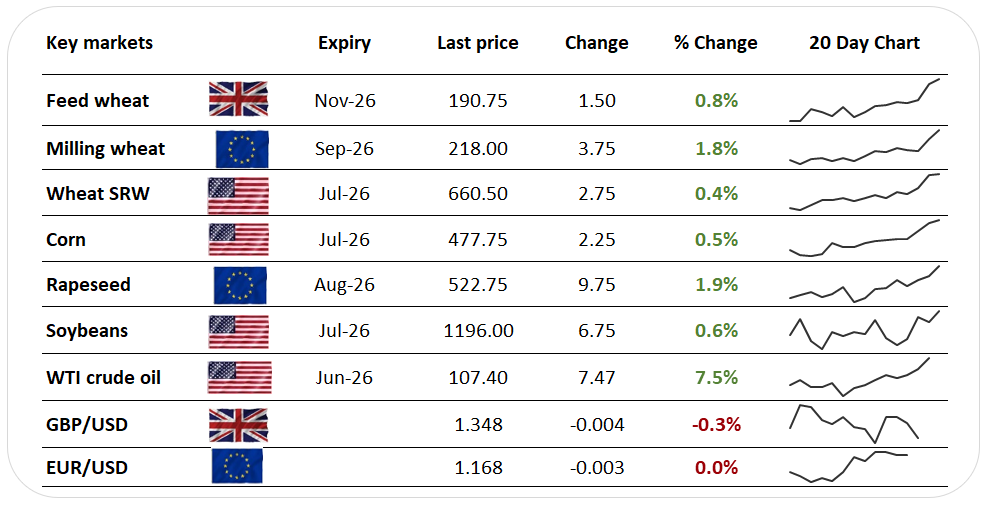
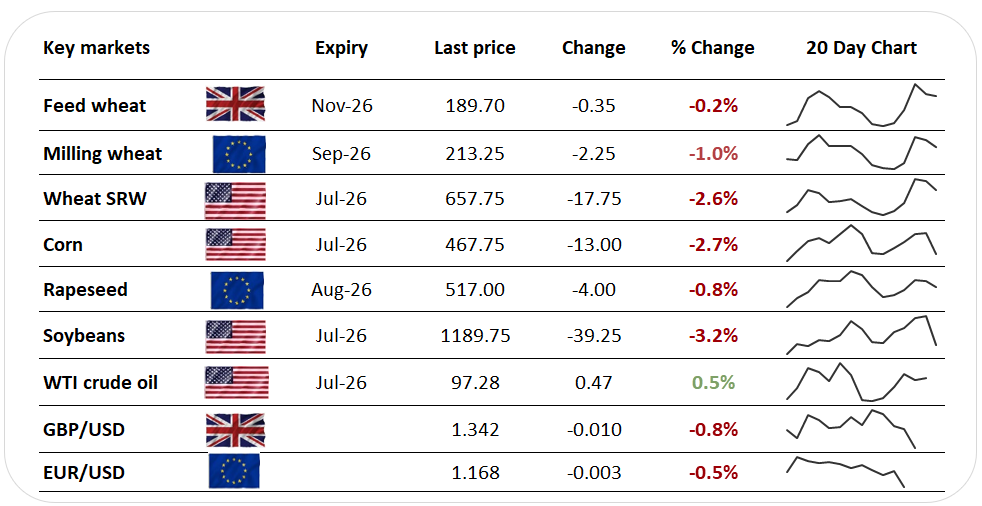
Soybean futures for July-26 traded 3.5% lower in late morning deals in Chicago, falling back below their 20-day and 50-day moving averages. Soyoil and soymeal, in which funds also held substantial net long positions, fell too, by 1.4% and 2.1% respectively.
Selling also spilled over into corn, in which traders had held some hope of the US reviving Chinese demand. China has not imported any US corn since July last year. Chicago corn futures for July-26 fell by 3.1%.
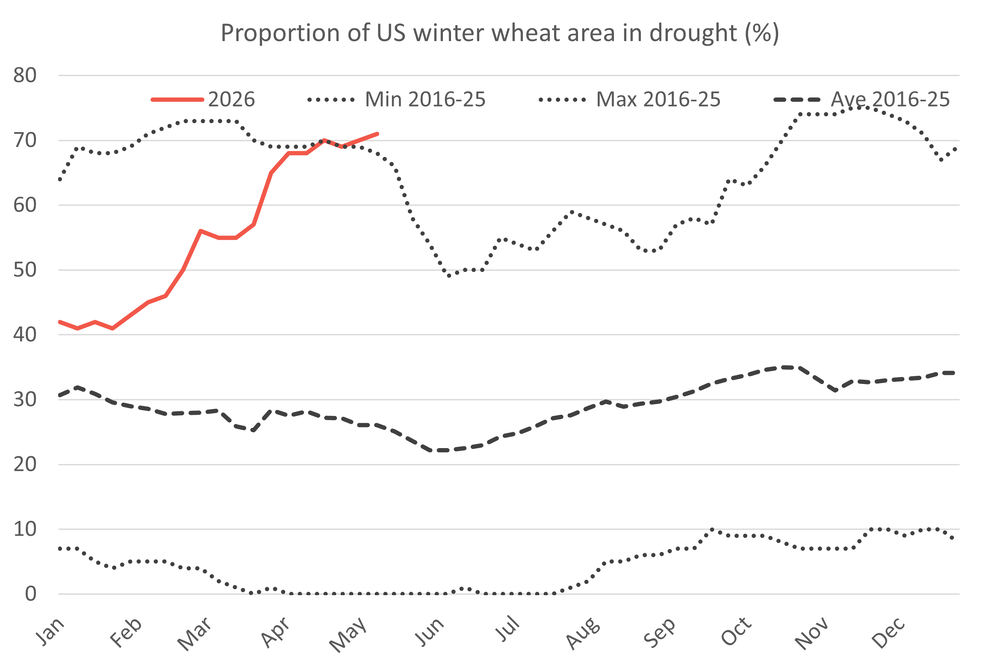
Wheat futures fell too, despite further expansion in US drought. The proportion of US winter wheat growing in drought areas rose by 1 point week on week to 71%, a seasonal high going back to 2000, USDA data on Thursday showed.
More promising for US yield prospects, weather maps turned wetter for the northern Plains.
“Initially dry weather across much of the country will be replaced by more active conditions during the weekend and early next week, as a storm system crosses the northwestern and central US,” the USDA said.
“Five-day rainfall totals should reach 1 to 2 inches or more from northern and eastern sections of the Plains into the Midwest.”
Chicago soft red winter wheat for July-26 slid by 2.8%, while hard red winter wheat for July-26 shed 2.9%.
In Europe, Paris milling wheat for September-26 traded 1.0% down in late deals, weighed too by forecasts for needed rains in eastern Europe.
London feed wheat for November-26 settled 0.2% lower, offered some support by a slide in the pound on political instability. The resignation of Wes Streeting as health secretary was viewed as heralding a leadership challenge to Prime Minister Sir Keir Starmer.
Sterling fell by 0.4% against the euro, and by 0.7% against the dollar, boosting the competitiveness of UK exports.