What would a Russia–Ukraine deal mean for wheat prices?



The Black Sea matters because Russia and Ukraine together typically account for nearly 30% of global wheat exports. Disruption there can therefore remove a significant volume of wheat from the market; CRM Agri reported the shortfall at around 1 million tonnes a week during the shipping crisis. Alternative routes—such as Ukrainian grain moving overland through Europe and Russian shipments via the Baltic—can replace only part of the lost capacity.
A deal that reopens Black Sea shipping would weigh on wheat prices, but CRM Agri expects the fall to be smaller and shorter than many buyers assume.
Why the talks matter
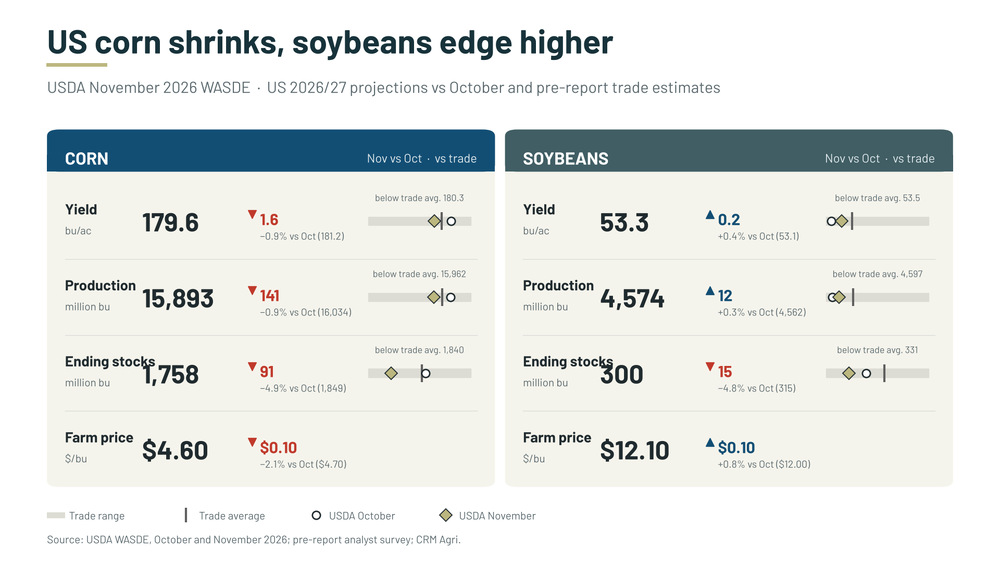
Since July, Russia and Ukraine have struggled to ship grain by sea. The USDA’s November report cut their 2026/27 wheat export forecasts to 39.0Mt and 11.5Mt. Excluding the two countries, major exporters’ stocks are forecast at 5.4% of world use — a five-year low.
Why a deal may not mean much cheaper wheat
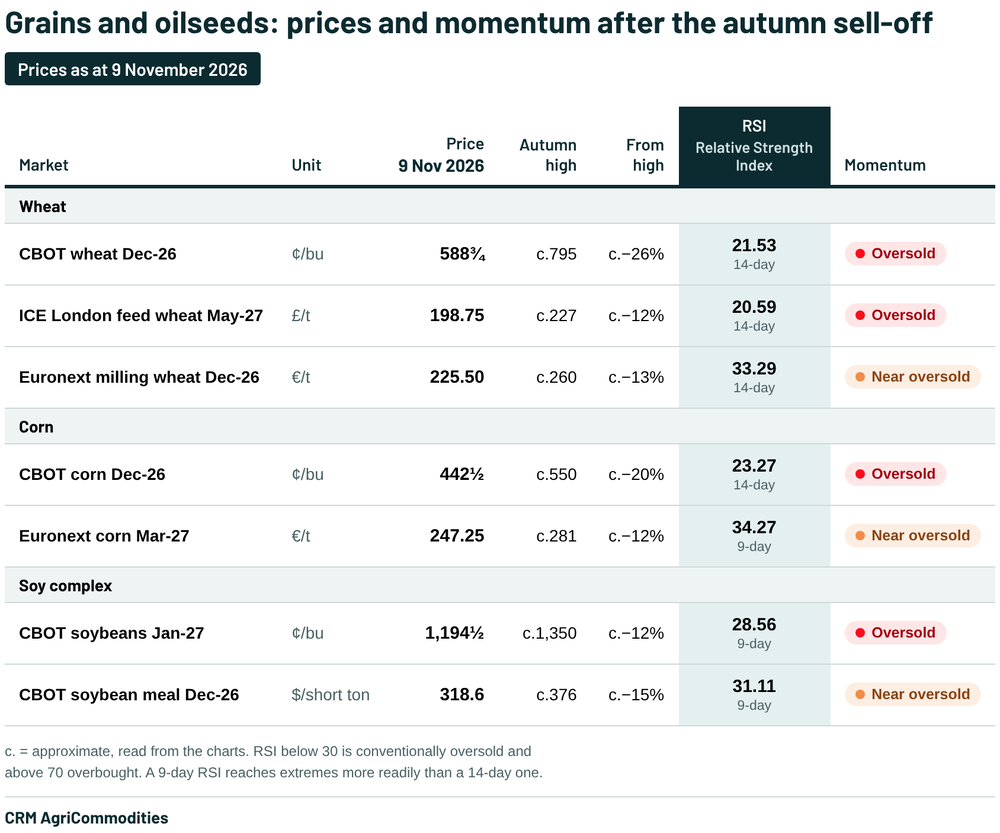
- Much is already priced in. Wheat is back near pre-crisis levels having already seen wide ranging selling pushing wheat and wider grains sharply lower.
- Exports cannot recover quickly. Damaged ports, winter weather and the backlog limit catch-up. The 2022 safe-passage deal took around five months to agree.
- Supplies elsewhere are tight, and early risks to the 2027 crop are building in Russia, France, the US and Australia.
If talks fail, CRM Agri sees price risk weighted to the upside into 2027.
What to consider
The chance of a sharp bounce has grown. Building cover in stages, and testing your position against both a deal and no deal, limits the cost of being wrong.
CRM Agri provides independent advice, analysis, data, monthly price forecasts, physical price data and direct analyst access. Request a trial
Frequently asked questions
Will wheat prices fall if Russia and Ukraine agree a deal? Likely, but by a limited amount: port damage, winter weather and tight stocks elsewhere restrict the downside (CRM Agri, November 2026).