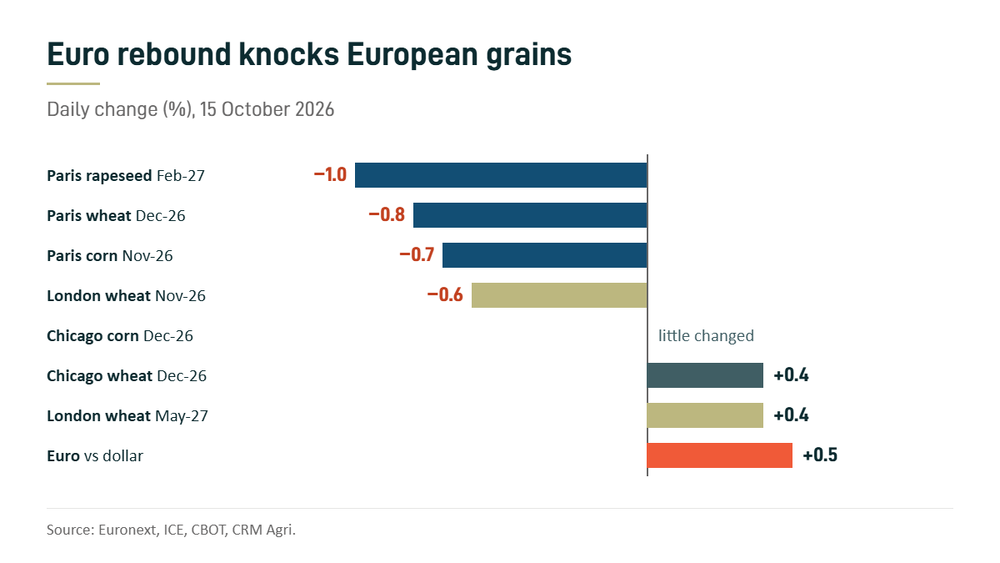
Markets anticipate USDA WASDE following differing crop tour results
The USDA’s September Wasde briefing on Friday looks set to put the focus firmly back on the size of the US corn and soybean crops, with traders expecting cuts to production and stocks after a deterioration in crop conditions through late August and early September and a number of recent tours and private estimates.
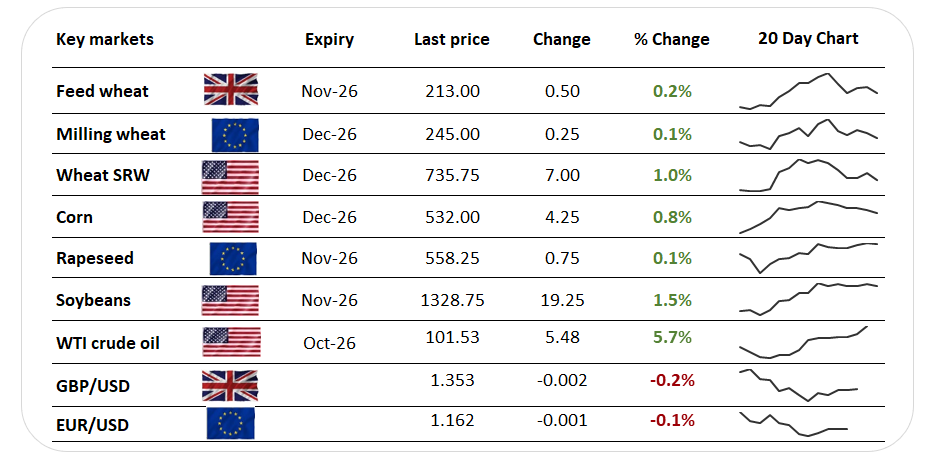
The report, released at 12:00 ET/ 17:00 UK time, will incorporate further field and objective yield data, making its US production estimates potentially more influential than those published in August.
For corn, analysts on average expect the USDA to cut its yield forecast to 178.1 Bu/acre, from 180.7 Bu/acre in August, although estimates range widely from 173.2-182.9 Bu/acre.
That would reduce US corn production to an average forecast of 15.77Bn Bu, or about 400.5Mt, from the USDA’s August estimate of 16.01Bn Bu, equivalent to roughly 406.7Mt. Trade estimates range from 15.34-16.21Bn Bu.
The broad expectation for a lower yield reflects worsening crop ratings, with only 56% of US corn rated good or excellent as of September 6, down from 68% a year earlier and the lowest rating of this growing season. Harvest has now begun, reaching 5%, slightly ahead of the five-year average.
However, uncertainty remains unusually high. Pro Farmer’s August crop tour estimated US corn yield at just 173.2 Bu/acre, whereas broker StoneX this week forecast a substantially stronger 182.9 Bu/acre.
StoneX’s figure would imply production of about 16.21Bn Bu, actually above the USDA’s August forecast.
A production cut is expected to tighten the US balance sheet further. Analysts see 2026/27 corn ending stocks falling to an average 1.53Bn Bu, from 1.65Bn Bu forecast last month, with estimates ranging from 1.36-1.82Bn Bu.
Global corn inventories are also expected lower, at 271.9Mt, compared with the USDA’s August forecast of 274.7Mt, which was a cut of 600Kt from July.
For soybeans, expectations are less clear cut. The average trade forecast puts yield at 52.5 Bu/acre, only marginally below the USDA’s August figure of 52.7 Bu/acre, with estimates ranging from 51.5-53.3 Bu/acre.
Production is expected at 4.49Bn Bu, equivalent to about 122.2Mt, versus 4.52Bn Bu in August.
Soybean crop ratings have held up better than corn, with 58% rated good or excellent, unchanged on the week, although below 64% at the same stage last year.
Demand may prove just as important as yield. US export commitments have been running ahead of their normal seasonal pace, while China has returned as a significant buyer, purchasing around 1Mt of US soybeans this week alone according to traders.
Analysts consequently expect US 2026/27 soybean ending stocks to fall to an average 289M Bu, from 320M Bu last month, while global stocks are forecast at 123.1Mt, down from 124.2Mt.
US wheat ending stocks are forecast at around 720M Bu, little changed from the USDA’s August figure of 717M Bu, while global 2026/27 inventories are expected almost unchanged at 273.2Mt.
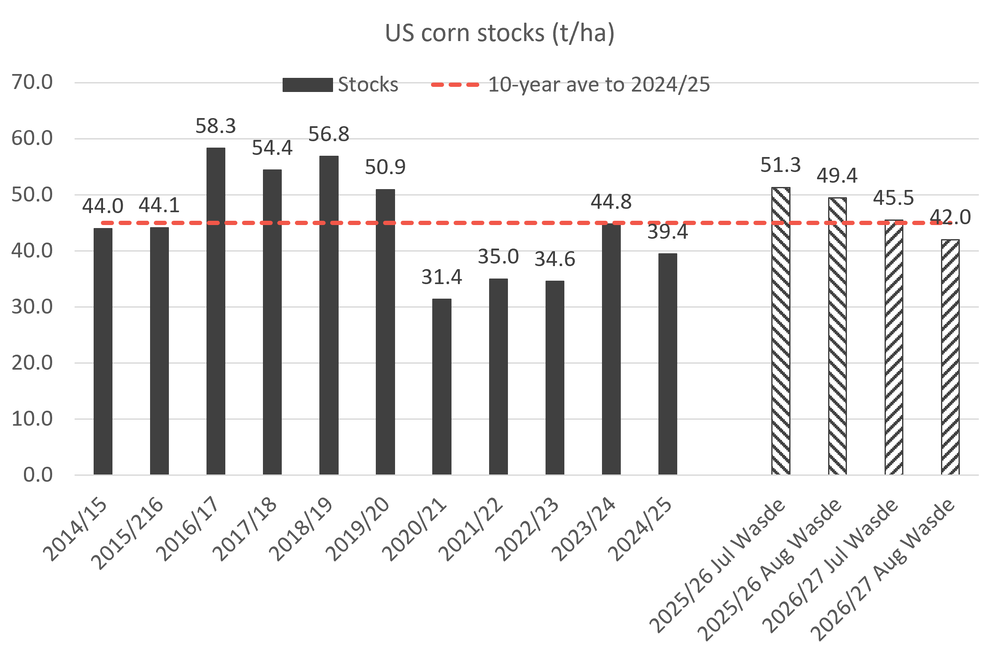
The greatest scope for market volatility therefore remains in corn. A USDA corn yield near or below the 178.1 Bu/acre trade consensus, combined with further reductions to stocks, would reinforce the tightening US supply outlook. Conversely, a figure closer to StoneX’s 182.9 Bu/acre estimate could leave the market facing considerably more supply than currently priced in.
For soybeans, the yield number remains important, but revisions to exports and ending stocks may carry increasing weight given the recent acceleration in Chinese demand.