The weather phenomenon is now seen as probable, with potential threats to agriculture
A return of El Nino in 2026 is now rated odds-on by official US meteorologists, boosting the chances of weather setbacks to some key crops.
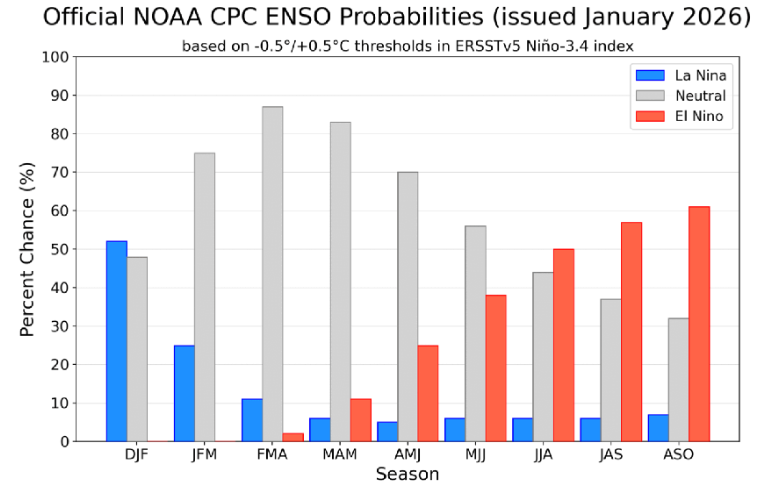
The US Climate Prediction Center on Thursday raised to 50% the chance of witnessing an El Nino during the June, July, August timeframe (JJA in chart above), from the 35% chance forecast in mid-December (chart below).
By July-September (JAS), the odds of the weather pattern having set in are 57%, up from a 35% reading last month. For August-October (ASO), the CPC raised the odds of El Nino from 38% to above 60%.
The prospect of an El Nino, of which warmer-than-usual Pacific ocean temperatures are a key indicator, threatens weather anomalies in countries including some major grain producers.
It has, for instance, a rich history of bringing drought to Australia, where a dry (southern hemisphere) spring would undermine yields of 2026/27 winter crops such as canola and wheat.
In India, the third-ranked wheat and fourth-largest rapeseed producer (although not significant in trade), El Nino’s have a habit of weakening monsoon rains, with southern Africa’s corn output prone to dryness setbacks too.
Likely impacts in South America include extensive rains in Argentina. While central Brazil has some history of El Nino dryness, the link is inconsistent.
There is a stronger link between the weather pattern and dryness in parts of South East Asia, threatening palm oil production.
There will also be a focus on the US, where El Nino has some history of bringing dryness to the Midwest and rains to the Plains.
The intensity and timing of the El Nino, as well as where it is centred in the Pacific, will be key to judging its impacts, should it emerge as the CPC currently foresees.
However, the takeaway is that risks to world grain production in 2026/27 have grown, a factor warranting some extra risk premium in prices.
The weather bureau made the assessment as it forecast an imminent end to the current La Nina, which has been linked to eg a dry spell in Argentina, which has been linked to some setback to the country’s 2025/26 corn crop after a strong start.
"The lack of rainfall in recent weeks in northern La Pampa and western Buenos Aires province is already impacting crops," the Buenos Aires grains exchange said on Thursday, reporting a 7-point reduction week on week to 75% “good” or “excellent” in its condition rating for Argentine corn.
Chart below shows common impacts of El Nino, in the June-to-August period.